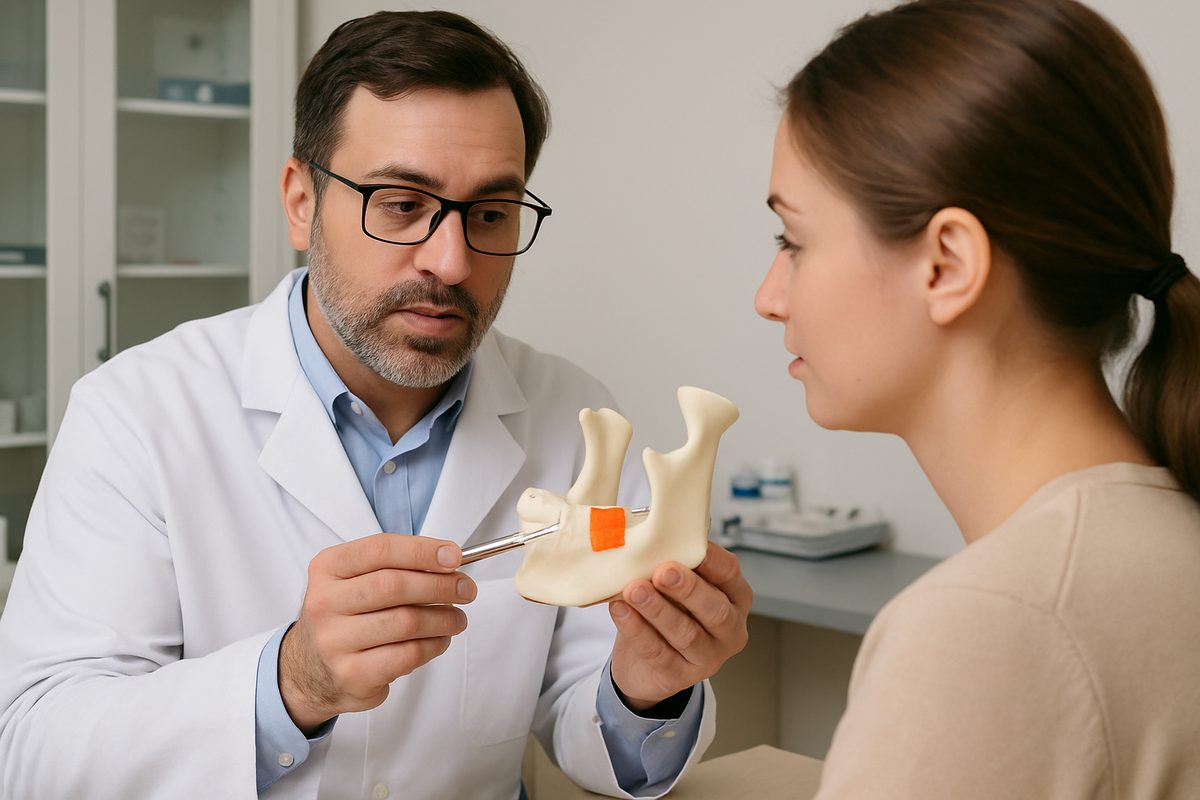
A bone graft may or may not be needed with dental implants. A “bone graft” is a procedure that restores lost jawbone so an implant has enough support. Some patients have plenty of healthy bone and can get implants right away. Others need a bone graft near Eden Prairie, MN as a common step for predictable implant care before implants are placed.
When is a bone graft needed for dental implants?
Bone loss from missing teeth
After a tooth is lost, the jawbone where the tooth sat begins to shrink. Over months or years this bone loss can make the ridge too thin or short for an implant. A bone graft rebuilds that area so a stable implant can be placed.
Gum disease, infection, or trauma
Advanced gum disease, tooth infections, or injury can destroy bone around teeth. When bone is damaged, a bone graft is often required before dental implants to restore the foundation needed for long-term success.
Timing: graft now vs. graft at implant placement
Choices include immediate socket preservation (graft at extraction) or staged grafting (graft first, place implant later). Immediate grafting helps preserve volume for future implants. Staged grafting is safer when infection or large defects exist.
Common types of bone grafts used with dental implants
Socket preservation (after extraction)
Socket preservation fills the tooth socket right after extraction to limit shrinkage. It’s a simple graft that helps preserve bone for later implant placement.
Ridge augmentation (horizontal/vertical)
Ridge augmentation rebuilds width (horizontal) or height (vertical) of the jaw. This is used when the ridge is too narrow or short to hold an implant securely.
Sinus lift / sinus graft
A sinus lift raises the sinus floor and places graft material when the upper back jaw lacks height. This makes room for implants in the molar and premolar area.
Graft materials: autograft, allograft, xenograft, synthetic
- Autograft (your own bone): Best integration, but requires a second site and more surgery.
- Allograft (human donor bone): Readily available, no second surgical site, good healing for many cases.
- Xenograft (animal bone): Often used to preserve volume; integrates slowly and can maintain shape long-term.
- Synthetic (man-made): No disease risk, predictable handling; may take longer to remodel into natural bone.
How bone graft near Eden Prairie, MN affects dental implant success
Bone volume and implant stability
Enough bone volume is critical for implant stability and force distribution. A successful bone graft near Eden Prairie, MN helps ensure the implant is secure and reduces long-term risk of implant failure.
Healing timeline and staging
Most grafts need several months to heal before an implant is placed. Small socket grafts may heal in 3–4 months; larger ridge or sinus grafts often need 4–9 months. Healing varies by graft type, patient health, and whether biologics like PRF are used.
Risks and how they are minimized
Risks include infection, delayed healing, or partial graft loss. Specialists reduce risk by using sterile technique, good imaging, careful patient selection, and modern tools like advanced imaging and biologic enhancers.
What the procedure and recovery look like for a bone graft and dental implants
Evaluation and advanced imaging
Evaluation includes a clinical exam and CBCT 3D imaging to measure bone and plan graft size and implant position. Good planning leads to predictable results.
During the procedure
Procedures are typically done with local anesthesia and sedation if needed. Modern tools such as piezosurgery and platelet rich fibrin (PRF) help precision and healing. The graft material is placed and stabilized, and the site is closed for healing.
Aftercare and recovery timeline
Aftercare includes short-term pain control, a soft-food diet, and oral hygiene instructions. Follow-up visits check healing. Most people return to normal activity within a few days, while full graft remodeling takes months.
Cost, insurance, and alternatives to a bone graft near Eden Prairie, MN
Factors that affect cost
Cost depends on graft size, material, whether a sinus lift is needed, and whether the graft is staged with implant surgery. Advanced imaging and biologic materials add to cost but can improve outcomes.
Insurance, financing, and planning
Dental insurance sometimes covers part of a bone graft, but limits vary. Many practices offer financing plans or payment options to spread the cost of grafting and implants over time.
When grafting might be avoided
In some cases, alternatives such as short implants, angled implants, or zygomatic implants are considered to avoid grafting. These options depend on anatomy and long-term goals and should be evaluated by a specialist.
About Dr. Andrés R. Sánchez and PerioWest — bone grafts and dental implants in Eden Prairie / Minneapolis, MN
Brief credentials
Dr. Andrés R. Sánchez is a periodontist with a Master’s from the Mayo Clinic, a Diplomate of the American Board of Periodontology, and published research in implant and regenerative dentistry.
Advanced technologies and techniques used
PerioWest uses LANAP laser therapy, advanced CBCT imaging, piezosurgery, PRF for natural healing, and modern bone regeneration methods to improve predictability and comfort for bone graft procedures.
How to get a consultation
Bring any recent x-rays or dental records to your visit. The consult will review your health history, imaging, treatment options, and a clear timeline and cost estimate. To discuss a bone graft near Eden Prairie, MN and your dental implants plan, call PerioWest to schedule a consultation and get personalized next steps.